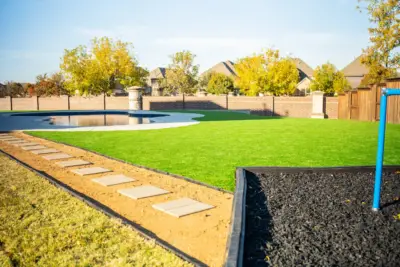
A good backyard water feature design looks effortless once it’s finished water moving quietly over stone, a pond settled naturally into the landscape, a fountain that seems like it’s always belonged there. What homeowners don’t usually see is everything happening underneath that makes it work: the excavation, the liner, the plumbing, and the drainage planning that determines whether the feature still looks good in five years or turns into an algae-filled headache within one summer.
Here’s what actually goes into a water feature that holds up in North Texas conditions the same process Buzzcutters Landscaping follows on every project.
Why Soil and Grading Come Before Anything Else
Before choosing stone, plants, or pump size, the ground itself has to be understood. Most backyard water feature design failures don’t start with a bad fountain or a cheap pump they start with skipping the site assessment that should have happened first.
Clay Soil Changes How Water Features Have to Be Built
North Texas sits on expansive clay soil that swells when saturated and shrinks when dry. That movement puts stress on pond liners, stone edging, and any structure built into or around a water feature. A pond or fountain base that isn’t prepared with this in mind can shift, crack, or develop leaks within just a season or two, especially after a wet spring followed by a dry summer.
A well-planned backyard water feature design accounts for this from the start proper excavation depth, a stable base layer, and liner or shell material rated to handle soil movement rather than fighting against it. Skipping this step to save on upfront cost is one of the most common reasons water features fail early.
Drainage Has to Work With the Feature, Not Against It
A water feature that’s beautifully designed but sits in a low spot where runoff collects will constantly deal with overflow, sediment, and water quality problems. Proper backyard water feature design factors in how water moves across the whole property, not just what’s happening inside the pond or fountain basin itself. Grading around the feature to direct runoff away, rather than into it, protects both water quality and the surrounding landscaping.
Choosing the Right Type of Water Feature for the Space
Not every water feature fits every yard, and choosing based on looks alone without considering maintenance, sun exposure, and available space often leads to disappointment. A few common options:
- Pondless waterfalls: lower maintenance, no standing water to attract mosquitoes, good for smaller spaces
- Koi or fish ponds: require more filtration and depth planning, but add a living element many homeowners want
- Fountains and bubbling urns: simpler to maintain, good for smaller patios or entry areas
- Natural-style ponds with plantings: blend into landscaping but need careful plant selection suited to North Texas heat
A thoughtful backyard water feature design starts with how the space will actually be used and maintained, not just which style looks best in a photo.
Questions to Ask Before Hiring Someone for the Project
Not every contractor approaches water features with the same level of planning. Before moving forward, it’s worth asking:
- How is the site graded to manage runoff around the feature?
- What liner or shell material is being used, and is it suited to expansive clay soil?
- What’s the filtration and pump plan, and is it sized correctly for the feature’s volume?
- How much ongoing maintenance should be expected, realistically?
- Can they show examples of completed water features that have held up for several years?
Homeowners who skip these questions and choose based on price alone often end up with a feature that needs repair or a full rebuild within a short time. Buzzcutters Landscaping encourages every homeowner to run through this list with any contractor they’re considering, not just the one they’re leaning toward.
Materials That Hold Up to Texas Heat and Soil Movement
Not every liner, stone, or pump is built to the same standard. A few things worth confirming during the design phase:
- Pond liners: EPDM rubber liners generally outperform cheaper PVC options under UV exposure and temperature swings
- Edging stone: needs a stable base to prevent shifting as clay soil moves seasonally
- Pumps and filtration: should be sized for the specific volume and flow rate, not a generic estimate
- Plumbing: buried lines need to be placed below the frost line and protected from root intrusion over time
A backyard water feature design that uses budget materials throughout tends to show wear fast, even if the initial installation looks polished.
Common Mistakes Homeowners Make
Underestimating Maintenance Needs
Every water feature requires some level of ongoing care skimming debris, checking pump function, managing algae growth. A honest backyard water feature design conversation includes a realistic picture of that maintenance, not just the finished look in a rendering.
Choosing Pump Size After the Design Is Finished
Pump and filtration sizing needs to be part of the design process from the beginning, not an afterthought added once the shape and stone are already decided. Undersized equipment leads to poor water circulation and algae problems that no amount of chemical treatment fully solves.
What a Well-Planned Water Feature Project Looks Like
A properly planned water feature starts with a site assessment soil conditions, drainage patterns, sun exposure, and how the space will be used. From there, a solid backyard water feature design process maps out excavation, liner or shell selection, plumbing, and filtration before any stone or planting decisions are finalized.
Buzzcutters Landscaping approaches every water feature project with that same sequence soil and drainage first, aesthetics second. It’s the difference between a feature that stays clear and functional for years and one that becomes a source of frustration within a single season.
Key Takeaways
A successful backyard water feature design comes down to more than the finished look in a photo. Soil preparation, proper drainage, and correctly sized equipment are what determine whether a water feature stays low-maintenance and beautiful for years or turns into a constant repair project.
Buzzcutters Landscaping works with homeowners across North Texas to plan water features suited to local clay soil and drainage conditions, not a generic template. If you’re considering a backyard water feature design for your property, it’s worth asking the questions above before committing to a plan. Buzzcutters Landscaping is glad to walk through what’s realistic for your specific yard.