Packaging is often the first physical interaction a customer has with a product. While boxes, bags, sleeves, and labels provide structure and protection, small finishing details can have an important role in how packaging is perceived. One of the simplest options is a circular adhesive label.
From small businesses and handmade products to retail packaging and subscription boxes, circle stickers can be used for branding, product identification, sealing, decoration, or providing basic information. However, creating an effective sticker involves more than choosing a shape and adding a logo. Material, size, adhesive, artwork, finish, and intended application all need to be considered before printing.
For businesses exploring Custom Circle Stickers, understanding these factors can help prevent common printing problems and ensure that the finished labels work effectively with the packaging they are applied to.
Why Circle Stickers Are Useful for Modern Packaging
Circular labels are versatile because their simple shape can work across many different packaging formats. Unlike rectangular labels, which may need to follow the edges of a box or container, a circular design can create a distinct visual element without requiring much space.
They can be used for several practical purposes, including:
- Closing tissue paper or wrapping
- Sealing mailer boxes and gift packaging
- Adding a logo to plain cartons
- Identifying product variations
- Communicating short messages
- Decorating retail packaging
- Supporting seasonal or promotional packaging
- Providing tamper-evident indications when suitable materials are used
For small brands, stickers can also provide a flexible way to add visual consistency across different packaging formats. A company may use the same logo sticker on a kraft box, mailing envelope, paper bag, or product carton.
This flexibility is particularly useful when packaging requirements change frequently. Instead of redesigning an entire box for every product variation, a business can sometimes use interchangeable labels to provide additional information or visual differentiation.
Choosing the Right Sticker Material
One of the most important decisions is the material used for the sticker. Paper remains popular because it is economical, printable, and suitable for many dry indoor applications. However, paper labels may not be appropriate where packaging is exposed to moisture, oils, refrigeration, or frequent handling.
Synthetic materials can offer greater resistance to water and abrasion. Depending on the application, options may include materials designed for moisture resistance, durability, or outdoor use.
Before selecting a material, consider:
Packaging Surface
A sticker intended for a smooth coated carton may behave differently from one applied to textured kraft paper. Uneven surfaces can reduce contact between the adhesive and packaging, potentially causing lifting at the edges.
Environmental Conditions
Consider whether the package will be exposed to:
- Humidity
- Refrigeration
- Heat
- Direct sunlight
- Oils or grease
- Frequent handling
A decorative label for a dry retail box generally has different requirements from a label placed on packaging that may encounter moisture.
Sustainability Requirements
Environmental considerations are increasingly influencing packaging decisions. Businesses may want to evaluate whether the sticker material, adhesive, backing paper, and packaging substrate are compatible with their recycling objectives.
It is important not to assume that a sticker is automatically recyclable simply because the packaging itself is recyclable. Material combinations and local recycling systems can affect the outcome.
Designing Custom Circle Stickers for Better Visual Communication
A circular format provides limited space, so the design should prioritize clarity. Trying to fit a logo, slogan, website address, social media details, product information, and decorative elements into a small circle can make the label difficult to read.
A more effective approach is to establish a clear visual hierarchy.
The most important element might be the brand mark, while secondary information can be reduced or removed entirely. For example, a small packaging seal may only require a logo and short phrase.
Consider the Sticker Size
Sticker dimensions should correspond to the packaging rather than being selected independently.
A very small sticker may lose important details, while an oversized label can dominate the package. Before printing, place a digital or physical mock-up of the proposed sticker on the actual packaging.
This simple test can reveal problems with:
- Logo readability
- Text size
- Placement
- Proportions
- Visual balance
- Clearance around the sticker
For packaging with limited surface area, several smaller labels may sometimes be more practical than one large design.
Use Appropriate Typography
Typography becomes particularly important with small-format printing. Thin fonts, tight spacing, and complicated decorative lettering can become difficult to reproduce accurately at smaller sizes.
Sans-serif typefaces and sufficient contrast are often easier to read, although the final choice should reflect the overall packaging identity.
When Clear Circle Stickers Make Sense
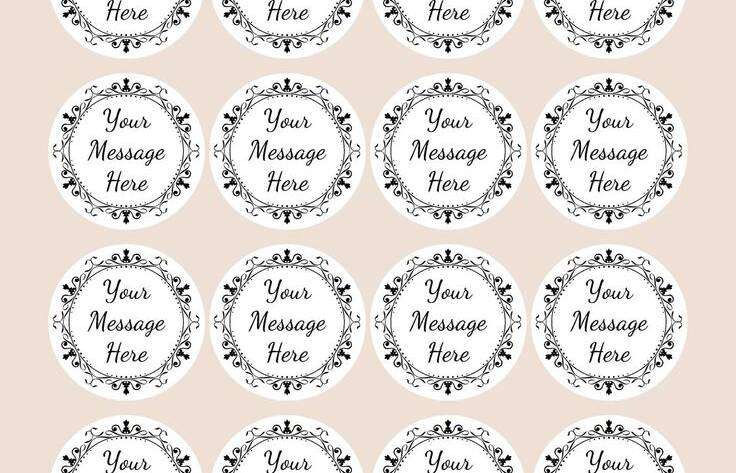
Clear circle stickers can create a different visual effect from conventional white or coloured labels. Because the background is transparent, the underlying packaging can remain visible.
This can be particularly useful on:
- Glass containers
- Clear packaging
- Coloured cartons
- Kraft boxes
- Printed paper
- Minimalist packaging designs
Clear labels can produce a subtle appearance when applied to suitable surfaces. However, transparency also introduces design considerations.
White artwork, for example, may require specialist printing processes because standard printing methods do not necessarily reproduce white ink in the same way as conventional colours. Similarly, low-contrast artwork can become difficult to see against a busy packaging background.
Testing the artwork against the actual substrate is therefore recommended before committing to a large print run.
Adhesive Selection Is More Important Than It Looks
The adhesive is an often-overlooked part of sticker specification. A label that looks excellent on screen may perform poorly if the adhesive is unsuitable for the packaging surface.
Different adhesive types can be developed for different requirements, including permanent attachment, removable applications, or specific surface conditions.
When choosing an adhesive, consider whether the sticker needs to:
- Remain attached throughout shipping and handling.
- Be removed without leaving significant residue.
- Adhere to textured or coated surfaces.
- Withstand changes in temperature or humidity.
- Function as a packaging seal.
The intended lifespan also matters. A temporary promotional label may require different properties from a permanent brand label.
For this reason, sample testing is often more useful than relying solely on a material specification sheet.
Printing Quality, Finish, and Colour Considerations
Printing technology can influence the appearance and durability of the finished sticker. Digital printing is widely used for short and medium runs because it can accommodate variable designs without requiring traditional plate production.
For larger production volumes, other printing processes may become appropriate depending on the design and material.
Finishes can also change the visual character of packaging. Common options include:
- Matte
- Gloss
- Transparent
- Textured
- Metallic effects
A matte surface may create a softer, understated appearance, while gloss can make colours appear more vivid. The appropriate choice depends on the packaging substrate and the desired visual result.
Colour accuracy should also be considered. A design that appears one way on a monitor can look different after printing because screens use light-based colour systems while printed materials rely on inks or other physical processes.
Using appropriate print-ready artwork and reviewing proofs can reduce unexpected results.
Common Mistakes to Avoid Before Printing
Several preventable mistakes can increase production costs or result in stickers that do not perform as expected.
1. Printing Without Testing the Surface
A label should ideally be tested on the actual packaging material. Adhesion can vary considerably between cardboard, coated paper, plastic, glass, and textured surfaces.
2. Making the Design Too Detailed
Small stickers have limited space. Excessive text and intricate graphics can reduce readability.
3. Ignoring the Bleed and Safe Area
Artwork should follow the printer’s specifications for bleed, trim, and safe zones. Important text or logos placed too close to the cutting edge may become uneven or partially trimmed.
4. Choosing Material Based Only on Appearance
A visually attractive material may not be appropriate for the conditions the package will encounter. Functional requirements should come first.
5. Skipping a Physical Proof
A physical sample can reveal issues that are difficult to identify on a computer screen. It allows businesses to evaluate scale, colour, adhesion, texture, and overall appearance before committing to a larger quantity.
Packaging suppliers such as Sky Custom Box can be useful reference points when businesses are comparing packaging components and considering how labels will work alongside boxes and other printed materials.
Practical Applications Across Retail and Small Business
Circular labels can support a wide variety of packaging strategies. A bakery might use them to close a paper box, while a cosmetics business could apply a small logo label to a product carton.
Other examples include:
- Handmade candles
- Clothing packaging
- Gift boxes
- Food packaging
- Subscription boxes
- Beauty products
- E-commerce parcels
- Craft products
- Event packaging
- Promotional merchandise
Their relatively small footprint makes them particularly adaptable to businesses that use several packaging sizes.
For growing brands, a consistent sticker system can also help create visual continuity. Different product categories can use different colours or short messages while retaining the same overall brand identity.
Final Considerations Before Printing
Selecting a circular label should involve more than choosing a design that looks attractive on a screen. The packaging surface, environmental conditions, adhesive, material, size, artwork, printing method, and intended purpose all influence the final result.
Before placing a print order, businesses should confirm:
- The exact sticker dimensions
- Suitable material
- Adhesive requirements
- Artwork resolution
- Bleed and safe areas
- Colour specifications
- Surface compatibility
- Required finish
- Expected environmental exposure
- Whether a physical proof is needed
The most effective packaging labels balance appearance with practical performance. Whether used as a brand identifier, packaging seal, decorative element, or product marker, a well-planned circular sticker can add useful functionality without requiring a complete packaging redesign.