Learning to drive is an important milestone that offers greater independence, flexibility and convenience. However, choosing the right type of driving lessons can make a significant difference to the learning experience. For many beginners, automatic vehicles provide a straightforward introduction to driving by removing the need to operate a clutch and change gears manually. This allows learners to concentrate more fully on road awareness, steering, traffic conditions and safe decision-making.
As driving education continues to evolve, more learners are exploring automatic driving as an alternative to traditional manual lessons. Whether someone is preparing for their first automatic driving lessons Bolton, returning to driving after a break or looking for a simpler learning experience, understanding how automatic instruction works can help them make an informed decision.
In areas such as Bolton, where learners encounter residential streets, busy junctions, roundabouts and different traffic conditions, structured instruction and regular practice are essential for developing safe driving habits.
1. Why Are Automatic Driving Lessons Becoming Popular?
Automatic vehicles have become increasingly common across the UK. Advances in vehicle technology, the growth of hybrid and electric cars, and changing learner preferences have contributed to greater interest in automatic driving education.
Unlike manual vehicles, automatic cars manage gear changes without requiring the driver to operate a clutch pedal. Most automatic cars have two main driving pedals: an accelerator and a brake.
This simpler arrangement can help beginners manage the basic controls while developing other essential driving skills.
Some important advantages include:
-
Simplified vehicle operation: Learners do not need to coordinate clutch control and manual gear changes.
-
Greater concentration: Beginners can focus more attention on road signs, pedestrians and surrounding traffic.
-
Reduced complexity in traffic: Stop-start situations may feel easier without repeated clutch operation.
-
Confidence development: Learners who struggle with manual controls may find automatic vehicles more comfortable.
-
Preparation for modern vehicles: Automatic transmission is increasingly relevant as hybrid and electric vehicles become more widely used.
However, automatic driving does not remove the need to understand road safety, vehicle positioning, hazard perception and traffic regulations. These remain essential regardless of transmission type.
2. What to Expect from an Automatic Driving Instructor in Bolton
A qualified instructor plays an important role in helping learners progress from basic vehicle control to independent driving. Choosing an experienced automatic driving instructor Bolton learners can access locally may also make lesson scheduling and familiarisation with nearby roads more convenient.
A professional instructor generally follows a structured learning approach based on the learner’s ability, confidence and progress.
Understanding the vehicle controls
The first stage usually involves becoming familiar with the vehicle. Learners are introduced to:
-
Accelerator and brake pedals.
-
Automatic gear selector positions, including P, R, N and D.
-
Mirrors and blind spots.
-
Steering and seating adjustments.
-
Indicators, lights and other vehicle controls.
-
Starting, stopping and securing the vehicle safely.
Understanding these controls before entering busier traffic helps reduce uncertainty.
Developing basic road skills
Once learners are comfortable with the vehicle, lessons gradually introduce practical driving situations.
These may include:
-
Moving away and stopping safely.
-
Steering and maintaining road position.
-
Approaching junctions.
-
Understanding traffic signs and road markings.
-
Negotiating roundabouts.
-
Reversing and parking.
-
Recognising and responding to hazards.
An effective instructor provides clear explanations, constructive feedback and opportunities to repeat challenging manoeuvres.
Building independent driving ability
As learners become more confident, lessons should introduce increasingly complex situations. These can include unfamiliar routes, changing speed limits, busier roads and independent navigation.
The objective is not simply to memorise routes but to develop the judgement needed to drive safely in different environments.
3. How to Prepare for Automatic Driving Lessons
Preparation can make driving lessons more productive and help learners feel comfortable from the beginning. Although instructors guide students through each stage, learners can take several practical steps to support their progress.
Set realistic learning goals
Every learner develops at a different pace. Some people become comfortable with basic vehicle controls quickly, while others need additional practice with junctions, parking or roundabouts.
Setting achievable goals helps learners measure improvement without feeling unnecessary pressure.
For example:
-
First lessons: Understand vehicle controls and basic movements.
-
Early development: Practise steering, stopping and moving away.
-
Intermediate stage: Improve junction handling and roundabout awareness.
-
Advanced stage: Develop independent driving and hazard perception.
-
Test preparation: Practise mock tests and address weaker areas.
Learn the Highway Code
The UK Highway Code provides essential information about road signs, speed limits, pedestrian crossings, priorities and safe driving practices.
Understanding these rules outside lesson time can help learners make better decisions during practical sessions.
Particular attention should be given to:
-
Road signs and traffic signals.
-
The hierarchy of road users.
-
Safe following distances.
-
Speed limits and stopping distances.
-
Pedestrian and cyclist safety.
-
Junction priorities and roundabout procedures.
Maintain consistency between lessons
Regular lessons can help learners retain recently developed skills. Long gaps between sessions may mean spending additional time revisiting previous topics.
Where possible, learners should arrange a consistent schedule that allows them to practise regularly without becoming overwhelmed.
It is also useful to discuss progress with the instructor after each lesson. Understanding which skills need improvement provides a clearer direction for the next session.
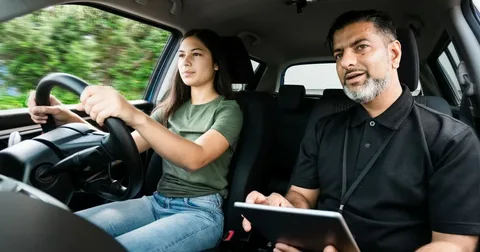
4. Common Challenges for Automatic Learners and How to Overcome Them
Although automatic vehicles simplify certain aspects of driving, learners still face challenges when developing practical road skills.
Recognising these difficulties early allows instructors and students to work together on effective solutions.
Difficulty judging speed and distance
Beginners sometimes struggle to maintain appropriate speeds or judge the distance between their vehicle and other road users.
Practical solution: Practise maintaining suitable following distances, checking speedometer readings and adjusting speed according to road conditions.
Nervousness at busy junctions
Junctions can feel intimidating because drivers must assess traffic, identify safe gaps and make decisions within a limited time.
Practical solution: Begin with quieter junctions before gradually progressing to busier roads. Developing observation routines can also improve decision-making.
Lack of confidence on roundabouts
Roundabouts require good observation, correct lane positioning, appropriate signalling and awareness of other vehicles.
Practical solution: Learn the correct procedures and practise different roundabout layouts with instructor guidance. Understanding road markings and exit positioning is particularly important.
Parking difficulties
Reversing and parking require accurate observation, steering control and awareness of surrounding vehicles and pedestrians.
Practical solution: Practise in quieter areas before attempting more challenging parking situations. Learners should develop consistent observation habits rather than relying entirely on reference points.
Managing driving anxiety
Some learners experience nervousness because they are unfamiliar with traffic conditions or worried about making mistakes.
Practical solution: Communicate concerns openly with the instructor, practise gradually and focus on individual improvements rather than comparing progress with other learners.
A supportive learning environment can make a considerable difference to confidence and long-term development.
5. Choosing the Right Driving School in Bolton
Selecting a suitable driving school is an important decision. Learners should consider more than lesson prices or availability. The quality of instruction, communication and learning structure can influence the overall experience.
Before arranging lessons, consider the following factors:
1. Instructor qualifications: Check that the instructor is appropriately approved and registered with the relevant UK driving instructor authority.
2. Teaching approach: Look for an instructor who explains driving techniques clearly, provides constructive feedback and adapts lessons to individual needs.
3. Local road knowledge: Familiarity with Bolton’s roads can help learners experience different traffic conditions, junction layouts and roundabouts.
4. Lesson structure: Ask whether lessons follow a progressive learning plan and include regular assessments of driving ability.
5. Vehicle suitability: Check that the automatic training vehicle is comfortable, properly maintained and suitable for learning.
6. Communication and scheduling: Reliable communication and consistent lesson arrangements can make the learning process easier to manage.
For learners researching local options, Elect Driving School is one example of a driving education provider associated with Bolton. Its location at Flat 5, 98, Chorley New Rd, Bolton, BL1 4DH, provides a local point of reference when exploring driving tuition in the area.
Understanding the automatic driving test
Learners should also understand the requirements of the practical driving test before approaching the final stages of training.
The UK practical test assesses whether candidates can drive safely and independently while demonstrating appropriate control of the vehicle.
The assessment includes:
-
Independent driving.
-
Following road signs or navigation instructions.
-
General driving ability.
-
Reversing manoeuvres.
-
Responding safely to different traffic situations.
-
Recognising and managing developing hazards.
Candidates must also complete an eyesight check and answer a vehicle safety question, commonly known as the ‘show me, tell me’ questions.
An important consideration is the licence restriction. Passing the practical test in an automatic car generally results in an automatic-only driving licence. Anyone wishing to drive a manual car will normally need to pass another practical test in a manual vehicle.
6. The Future of Automatic Driving Education in the UK
The driving industry is changing as vehicle technology continues to develop. Automatic transmission is becoming increasingly relevant, particularly with the growing popularity of hybrid and electric vehicles.
Many electric cars do not use conventional multi-speed manual gearboxes, making automatic driving skills increasingly useful for modern motorists.
Several developments are influencing driving education:
-
Electric vehicle adoption: More learners are considering automatic tuition because many electric vehicles use automatic-style controls.
-
Changing learner preferences: Some beginners prefer simpler vehicle operation and a more focused approach to road learning.
-
Technology-assisted driving: Parking sensors, reversing cameras and other driver-assistance features are becoming more common.
-
Greater emphasis on road awareness: Modern driving education continues to prioritise hazard perception, responsible decision-making and awareness of vulnerable road users.
Despite these developments, technology should never replace responsible driving behaviour. Drivers must remain attentive, understand their surroundings and maintain full control of their vehicles.
For learners in Bolton, developing strong automatic driving skills can provide a useful foundation for driving modern vehicles and navigating everyday journeys.
Conclusion
Learning to drive an automatic car can be a practical option for people who want to simplify vehicle operation while concentrating on essential road skills. However, becoming a safe and confident driver requires consistent practice, professional instruction, patience and a good understanding of UK road regulations.
From learning basic controls to handling junctions, roundabouts and independent driving, each stage contributes to long-term driving confidence. Choosing a suitable instructor, maintaining regular lessons and addressing weaknesses early can make the learning process more effective.
Whether someone is beginning their driving journey or exploring alternatives to manual tuition, automatic driving lessons Bolton learners consider should focus on building genuine driving ability rather than simply preparing for the practical test. Ultimately, good driving education is about developing responsible, observant and confident motorists who can handle real-world road conditions safely.