


Learning to drive is an important milestone that offers greater independence, flexibility and convenience in everyday life. However, choosing the right type of driving lessons can make a significant difference to a learner’s experience. In recent years, automatic vehicles have become an increasingly popular option among new drivers, particularly those who want to concentrate on road awareness, vehicle control and developing safe driving habits without managing manual gear changes.
For learners exploring automatic driving lessons Wolverhampton, understanding how automatic tuition works, what to expect from professional instruction and how to prepare for the practical driving test can help make the learning process more straightforward.
Wolverhampton offers a varied driving environment, with residential streets, busy junctions, roundabouts, urban traffic and routes connecting neighbouring areas. These conditions provide valuable opportunities for learners to develop practical driving skills and become comfortable handling different road situations.
Why Are Automatic Driving Lessons Becoming More Popular?
Automatic cars are becoming increasingly common across the UK. Improvements in vehicle technology, the growth of hybrid and electric vehicles, and changing learner preferences have contributed to greater interest in automatic driving tuition.
Unlike manual vehicles, automatic cars do not require learners to operate a clutch pedal or manually select gears. The vehicle manages gear changes automatically, allowing drivers to concentrate on steering, braking, acceleration and observing their surroundings.
Some important advantages include:
- Simpler vehicle operation: Learners do not need to coordinate clutch control and gear changes.
- Greater concentration: More attention can be directed towards road signs, traffic conditions and potential hazards.
- Reduced complexity: Beginners may find it easier to understand vehicle movement without managing multiple controls.
- Suitable for modern vehicles: Many hybrid and electric cars use automatic transmission systems.
- Practical urban driving: Automatic vehicles can be convenient when navigating stop-start traffic and busy junctions.
However, learning in an automatic vehicle does not remove the responsibility of developing strong driving skills. Learners must still understand road positioning, speed management, hazard perception, pedestrian safety and the Highway Code.
Choosing the Right Automatic Driving School in Wolverhampton
Selecting a suitable instructor is one of the most important decisions a learner can make. A professional instructor should provide structured lessons, clear explanations and practical guidance that matches the learner’s current ability.
When comparing an automatic driving school Wolverhampton, learners should consider several factors before committing to a course.
1. Check Instructor Qualifications
Learners should check that their instructor is properly qualified and authorised to provide paid driving instruction. In Great Britain, Approved Driving Instructors (ADIs) are registered with the Driver and Vehicle Standards Agency (DVSA).
A qualified instructor should understand current driving test requirements, road safety principles and effective teaching methods.
2. Look for Structured Lesson Plans
A well-organised learning programme should gradually introduce new skills rather than expecting beginners to manage complicated situations immediately.
A typical learning journey may include:
- Understanding vehicle controls and safety checks.
- Moving off and stopping safely.
- Steering and maintaining appropriate road position.
- Approaching junctions and roundabouts.
- Reversing and completing manoeuvres.
- Developing independent driving skills.
- Preparing for the practical driving test.
Progress should be based on the learner’s abilities rather than a fixed timetable.
3. Consider Local Road Knowledge
Local road experience can be particularly valuable in Wolverhampton. Learners benefit from practising in different traffic conditions, including residential areas, busier town-centre roads and roads with changing speed limits.
An instructor familiar with the local area can help learners understand common road layouts and develop the confidence to deal with unfamiliar situations independently.
4. Evaluate Communication and Teaching Style
Every learner has a different learning pace. Some may quickly understand steering and vehicle control but need additional support with roundabouts or busy junctions.
A patient instructor who provides constructive feedback can help learners recognise mistakes and improve without feeling unnecessarily pressured.
How to Make Faster Progress with Intensive Automatic Courses
For people with limited availability or a preference for concentrated learning, Intensive automatic courses Wolverhampton may provide an alternative to traditional weekly lessons.
An intensive course generally involves arranging multiple driving sessions over a shorter period. Depending on the provider and the learner’s experience, training may be organised across several days or weeks.
However, intensive tuition is not automatically suitable for everyone. The best approach depends on previous experience, confidence, learning ability and the amount of practice required.
Benefits of Intensive Automatic Training
Intensive lessons can offer several practical advantages:
- Consistent practice: Regular sessions help learners retain recently developed skills.
- Focused learning: Learners can concentrate on driving without long gaps between lessons.
- Structured preparation: Training can be organised around specific areas that need improvement.
- Convenient scheduling: A concentrated programme may suit people with work, education or personal commitments.
- Skill development: Repeated practice can help reinforce safe driving routines.
Who May Benefit from Intensive Courses?
Intensive automatic training may be suitable for:
- Beginners who can commit sufficient time to regular lessons.
- Learners who have previously taken driving lessons.
- People returning to driving after a long break.
- Learners preparing to address specific weaknesses before their practical test.
- Individuals who prefer a structured learning schedule.
Before booking, learners should discuss their current ability with an instructor. Someone with no previous experience may need more training than someone who has already developed basic driving skills.
It is also important to remember that completing an intensive course does not guarantee passing the practical driving test. Test readiness should be determined by driving ability, not simply by the number of lessons completed.
Common Challenges Faced by Automatic Learners and How to Overcome Them
Although automatic vehicles simplify certain aspects of driving, learners can still experience difficulties when developing practical road skills.
Understanding common challenges can help learners prepare more effectively.
Managing Busy Junctions and Roundabouts
Wolverhampton’s road network includes different types of junctions and roundabouts. Beginners may struggle with selecting safe gaps, checking mirrors and positioning their vehicles correctly.
Practical solution: Practise approaching junctions at a controlled speed, observing traffic from different directions and making decisions without rushing. Regular practice with instructor guidance helps develop better judgement.
Building Confidence in Heavy Traffic
Driving in busy traffic can initially feel overwhelming, especially when several vehicles, pedestrians and cyclists are present.
Practical solution: Start with quieter roads and gradually progress towards busier routes. Maintaining a safe following distance and checking mirrors regularly can improve awareness.
Understanding Speed Limits
Learners sometimes find it difficult to recognise changing speed limits, particularly when moving between residential roads and faster routes.
Practical solution: Develop the habit of checking road signs, identifying changes in road conditions and adjusting speed appropriately. Drivers should never assume that every road has the same speed limit.
Improving Hazard Perception
Recognising potential hazards early is an essential part of safe driving. Hazards may include parked vehicles, pedestrians crossing unexpectedly, cyclists, roadworks and vehicles emerging from side roads.
Practical solution: Look well ahead, scan the road continuously and consider what other road users might do next. Early observation allows drivers more time to respond safely.
Preparing for Independent Driving
Some learners become comfortable when following instructor directions but struggle when asked to make decisions independently.
Practical solution: Gradually introduce independent driving exercises, including following traffic signs and navigating unfamiliar routes. This helps develop confidence and decision-making skills.
Preparing for the Automatic Practical Driving Test
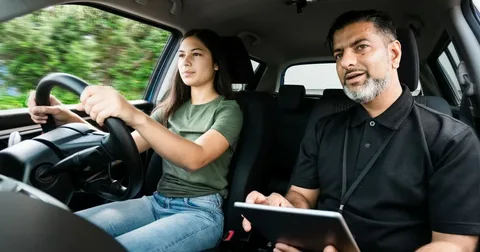
Passing the practical driving test requires more than knowing how to operate an automatic vehicle. Candidates must demonstrate safe, responsible and independent driving throughout the assessment.
The DVSA practical driving test generally includes:
- Eyesight checking requirements.
- Vehicle safety questions, often called show me, tell me questions.
- General driving ability.
- Independent driving.
- One reversing manoeuvre.
- Safe responses to different road and traffic situations.
Learners should also understand the importance of mirror checks, signalling, appropriate speed, road positioning and awareness of vulnerable road users.
Essential Preparation Tips
Before taking the test, consider the following recommendations:
- Practise regularly: Consistent driving experience helps develop reliable habits.
- Review mistakes: Understand why an error occurred and how to avoid repeating it.
- Practise different routes: Experience a range of road layouts and traffic conditions.
- Learn the Highway Code: Understand road signs, markings, priorities and legal responsibilities.
- Develop independent judgement: Avoid relying entirely on instructor instructions.
- Take mock tests: Simulated assessments can identify weaknesses before the actual examination.
- Check test readiness: Discuss your progress honestly with your instructor before booking.
Learners should also remember that passing in an automatic car normally results in an automatic-only driving licence. Anyone wishing to drive a manual car later will need to pass a manual practical driving test.
The Importance of Choosing a Reliable Local Driving Provider
Finding a suitable driving provider involves more than comparing lesson prices or course durations. Learners should look for transparent information, appropriate instructor qualifications, realistic training plans and a professional approach to road safety.
A provider should explain how lessons are structured, what support is available and how progress is assessed.
For example, Driving School Automatic, based in West Bromwich, is relevant to learners exploring automatic driving tuition in the wider West Midlands area. When researching providers, learners in Wolverhampton should confirm service-area coverage, instructor availability and lesson arrangements before making a decision.
It is also worth considering practical details such as vehicle condition, lesson duration, cancellation policies and whether the instructor can accommodate individual learning requirements.
Conclusion
Automatic driving tuition offers a practical route towards gaining independence and developing essential road skills. By removing the need for manual gear changes, automatic vehicles allow learners to focus more closely on observation, positioning, hazard awareness and safe decision-making.
For anyone considering automatic driving lessons Wolverhampton, choosing a qualified instructor, following a structured learning programme and practising consistently are important steps towards becoming a confident driver.