Learning to drive is an important milestone that offers greater independence, flexibility and convenience in everyday life. However, choosing the right type of driving lessons can make a significant difference to how confidently and comfortably a learner develops their driving skills. For many beginners, automatic cars provide a straightforward way to understand road positioning, traffic awareness and essential driving techniques without the additional responsibility of operating a manual gearbox.
With more learners exploring automatic vehicles, Automatic driving lessons Willenhall have become an important consideration for people looking to develop practical driving skills and prepare for their practical driving test. Automatic vehicles can simplify certain aspects of learning, allowing students to concentrate on steering, observation, speed control and decision-making.
Whether someone is a complete beginner, returning to driving after a long break or looking for an alternative to manual transmission, understanding how automatic driving lessons work can help them make an informed decision.
Why Are Automatic Driving Lessons Becoming More Popular?
The growing popularity of automatic vehicles reflects wider changes in the automotive industry. Modern vehicles increasingly feature automatic transmissions, hybrid technology and electric powertrains. Many electric vehicles, in particular, do not require traditional manual gear changes, making automatic driving knowledge increasingly relevant.
For new learners, automatic driving lessons can provide several practical advantages.
1. Simpler vehicle operation
Automatic cars change gears without requiring the driver to operate a clutch pedal or manually select gears while moving. This can make the initial learning process less complicated, particularly for beginners who feel nervous about coordinating several controls simultaneously.
2. Greater concentration on road awareness
Learners can dedicate more attention to important driving responsibilities, including:
- Checking mirrors regularly.
- Maintaining appropriate following distances.
- Identifying potential hazards.
- Understanding traffic signs and road markings.
- Anticipating the actions of other road users.
- Maintaining suitable speed and road positioning.
These skills are essential for safe driving, regardless of whether someone chooses an automatic or manual vehicle.
3. Useful for modern vehicle ownership
Automatic transmission vehicles are widely available across different vehicle categories. As hybrid and electric vehicles become more common, learning to operate automatic vehicles can provide useful preparation for future transport needs.
4. A potentially more comfortable learning experience
Some learners find automatic cars easier to manage, particularly when navigating busy junctions, traffic queues and repeated stopping and starting. Removing clutch control can help reduce the number of tasks a beginner needs to coordinate.
However, automatic lessons still require concentration, practice and consistent instruction. They do not remove the need to develop strong observation and decision-making skills.
What Should Learners Expect During Automatic Driving Lessons in Willenhall?
Understanding the learning process before starting lessons can help beginners feel more prepared. Professional driving instruction generally follows a structured approach, allowing learners to develop basic vehicle control before progressing towards more complicated road situations.
When considering Automatic driving lessons Willenhall, learners should look for instruction that covers both practical vehicle operation and the knowledge required to become a responsible road user.
1. Understanding Automatic Vehicle Controls
The first stage usually involves becoming familiar with the vehicle’s main controls.
Most automatic cars feature the following gear selections:
- P (Park): Used when the vehicle is safely parked.
- R (Reverse): Used for reversing manoeuvres.
- N (Neutral): Disconnects the drive from the wheels.
- D (Drive): Used for normal forward driving.
Learners also need to understand the accelerator, brake pedal, indicators, steering controls, mirrors and other essential features.
An instructor can explain how to select gears safely and maintain proper control before introducing more demanding driving situations.
2. Developing Basic Road Skills
Once learners understand the vehicle, lessons can progress towards practical driving skills.
These may include moving away safely, stopping smoothly, steering accurately and maintaining suitable road positioning.
Beginners should also practise mirror checks, signalling correctly and responding appropriately to changing traffic conditions.
3. Practising Different Road Situations
Driving conditions can vary considerably depending on the time of day, traffic volume and road layout.
Learners should gradually gain experience with:
- Residential streets and narrow roads.
- Busy junctions and roundabouts.
- Pedestrian crossings and school areas.
- Traffic lights and controlled intersections.
- Parking spaces and reversing manoeuvres.
- Different speed limits and road conditions.
Gradual exposure to different situations helps learners develop confidence without rushing their progress.
How to Choose the Right Automatic Driving Instructor in Willenhall
Choosing a suitable instructor is one of the most important decisions a learner makes. A supportive instructor can help identify weaknesses, explain unfamiliar situations and create a structured learning plan.
When researching an Automatic driving instructor Willenhall, consider the following factors.
Check Instructor Qualifications
In the UK, professional paid driving instruction must meet the relevant Driver and Vehicle Standards Agency (DVSA) requirements. Learners should check that their instructor is appropriately qualified and authorised to provide paid driving lessons.
An approved instructor should be able to explain driving techniques clearly and provide guidance that follows current road safety standards.
Look for Clear Communication
Driving lessons involve learning unfamiliar skills, so communication matters. A good instructor should explain mistakes constructively rather than making learners feel uncomfortable.
Useful qualities include:
- Patience with beginners.
- Clear and understandable explanations.
- Consistent feedback after lessons.
- A structured approach to teaching.
- Adaptability to different learning speeds.
Consider Lesson Structure and Progress Tracking
Learners benefit from understanding what they have achieved and which skills need further attention.
A structured learning approach can include:
- Initial assessment of existing driving knowledge.
- Identification of strengths and weaknesses.
- Clear objectives for each lesson.
- Regular progress reviews.
- Preparation for independent driving and the practical test.
Learners should also discuss lesson availability, cancellation arrangements, vehicle suitability and pricing before committing to a programme.
For people researching local instruction options, Driving School Automatic, based in West Bromwich, is one provider whose services may be worth considering when exploring automatic driving tuition in the wider West Midlands area.
Common Challenges Faced by Automatic Driving Learners and How to Overcome Them
Although automatic vehicles simplify gear operation, learning to drive still presents challenges. Recognising these difficulties early can help learners develop better habits and make steady progress.
Nervousness and Lack of Confidence
Many beginners experience anxiety during their first few driving lessons. Busy roads, unfamiliar junctions and the responsibility of controlling a vehicle can initially feel overwhelming.
Practical solution: Start with quieter roads and gradually progress to more demanding environments. Regular lessons, constructive feedback and realistic practice objectives can help improve confidence.
Difficulty Understanding Junctions
Junctions require learners to assess traffic, identify safe gaps, observe road signs and make appropriate decisions.
Practical solution: Practise different junction layouts with an instructor. Develop a consistent routine involving observation, positioning, signalling where necessary and careful decision-making.
Maintaining Proper Speed
New drivers sometimes struggle to judge appropriate speeds, especially when road conditions change.
Practical solution: Learn to recognise speed limits, observe road conditions and adjust speed according to visibility, traffic and potential hazards. Remember that the posted speed limit is a maximum, not a target.
Developing Effective Observation Habits
Mirror checks and blind-spot awareness are essential for safe driving. Beginners may focus too heavily on the road directly ahead and overlook surrounding traffic.
Practical solution: Build consistent observation routines into everyday driving practice. Check mirrors before changing speed or direction and perform appropriate blind-spot checks before moving off or changing lanes.
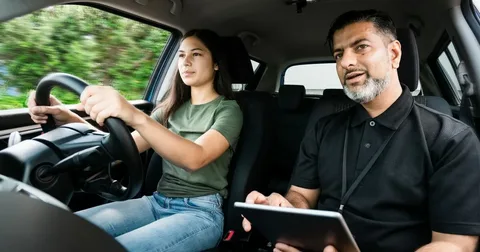
How to Prepare for the UK Automatic Driving Test
Preparing for the practical driving test requires more than learning how to operate a vehicle. Learners must demonstrate that they can drive safely, independently and responsibly in different traffic conditions.
The UK practical driving test assesses several important areas, including:
- Vehicle safety questions, commonly called the ‘show me, tell me’ questions.
- Independent driving using a sat nav or traffic signs.
- General driving ability and road awareness.
- Appropriate responses to hazards and other road users.
- Safe execution of one reversing manoeuvre.
- Independent decision-making and vehicle control.
Useful Preparation Tips
Practise consistently: Regular lessons help reinforce previously learned techniques and reduce the likelihood of forgetting important procedures.
Understand the Highway Code: Learners should study road signs, traffic rules, speed limits and safe driving practices.
Work on weaker areas: Ask the instructor to identify recurring mistakes and dedicate additional practice to those skills.
Experience different road conditions: Practising in different traffic situations helps develop flexibility and better judgement.
Avoid rushing the test: Learners should take their practical test when their instructor considers them ready and they can demonstrate consistent, safe driving.
One important consideration is the type of licence obtained. Passing the practical test in an automatic car normally results in an automatic-only licence. Anyone wishing to drive a manual car independently will generally need to pass an additional practical test in a manual vehicle.
The Future of Automatic Driving and Changing Transport Trends
The automotive industry is continuing to evolve, with electric vehicles, hybrid cars and advanced driver assistance systems influencing how people travel.
Automatic transmission technology is becoming increasingly familiar to drivers, particularly as manufacturers introduce more vehicles without traditional manual gearboxes.
For learners, this development highlights the value of understanding modern vehicle controls and developing transferable road safety skills.
However, technology does not replace responsible driving. Drivers must still understand road signs, anticipate hazards, respect speed limits and remain attentive to their surroundings.
Learning with a qualified instructor provides an opportunity to develop these essential skills while becoming familiar with the features of modern automatic vehicles.
Conclusion
Automatic driving lessons offer a practical learning option for people who want to develop their driving abilities without the additional complexity of manual gear changes. From understanding vehicle controls to navigating busy junctions and preparing for the practical test, a structured learning experience can help beginners become safer and more confident drivers.
When choosing an Automatic driving instructor Willenhall, learners should prioritise appropriate qualifications, clear communication, supportive teaching methods and consistent progress assessment.