Cloud adoption has become an important part of modern business strategy. Organizations use cloud platforms to host applications, manage data, improve scalability, and support digital transformation. However, choosing the right technology partner can be challenging when businesses have different infrastructure requirements, security needs, budgets, and growth plans.
The right Cloud Engineering Services can help businesses design reliable cloud environments, modernize existing applications, automate infrastructure, and improve operational efficiency. Rather than choosing a provider based only on price or a list of technologies, businesses should evaluate capabilities, experience, security practices, and long-term support.
What Should You Look for in Cloud Engineering Services?
Cloud engineering covers much more than simply hosting an application online. A capable provider should understand how cloud infrastructure, applications, security, automation, and business requirements work together.
Before selecting a provider, consider the following areas.
1. Evaluate Technical Expertise
Start by reviewing the provider’s technical capabilities. Look for experience with major cloud platforms, infrastructure automation, containers, databases, networking, DevOps, monitoring, and security.
A provider should also be able to explain technical decisions in business terms. For example, they should clearly explain why a particular architecture is appropriate for your workload rather than recommending technologies simply because they are popular.
2. Review Cloud Infrastructure Capabilities
Strong Cloud Infrastructure Services should cover the core components required to operate a reliable cloud environment.
These may include:
- Cloud architecture and infrastructure design
- Compute and storage configuration
- Networking and connectivity
- Infrastructure automation
- Backup and disaster recovery
- Monitoring and performance optimization
- Identity and access management
- Security and compliance controls
The provider should also consider future scalability instead of designing infrastructure only around current requirements.
3. Consider Application Development and Modernization
Infrastructure alone cannot solve every cloud challenge. Businesses also need applications that are designed to perform effectively within cloud environments.
This is where Cloud Development Services can become valuable. Depending on the business requirements, these services may involve developing cloud-native applications, modernizing legacy systems, building APIs, containerizing workloads, or integrating managed cloud services.
Ask potential providers whether they have experience working with applications similar to yours and whether they can support development beyond the initial deployment.
4. Check Their Approach to Security
Security should be considered from the beginning of a cloud project rather than added after deployment.
Ask potential providers how they handle access management, encryption, network security, vulnerability management, logging, monitoring, and backup protection.
Businesses operating in regulated industries should also determine whether the provider understands relevant compliance requirements.
A strong security approach should protect applications and data while still allowing authorized teams to work efficiently.
5. Look for Automation and DevOps Expertise
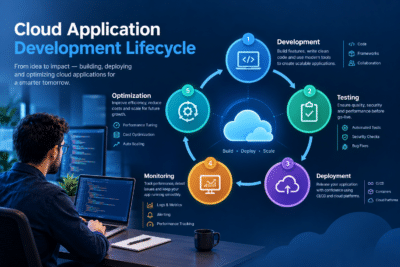
Manual infrastructure management can become difficult as cloud environments grow. Automation helps businesses create consistent environments and reduce repetitive operational tasks.
When evaluating Cloud Engineering Solutions, ask about infrastructure-as-code, automated testing, CI/CD pipelines, deployment automation, monitoring, and incident management.
These capabilities can help development and operations teams release software more efficiently while maintaining greater consistency.
Practical Steps to Choose the Right Provider
Choosing a cloud engineering partner becomes easier when the evaluation process is structured.
Step 1: Define Your Business Requirements
Before contacting providers, identify what you actually need. Your objectives could include migrating legacy applications, improving scalability, reducing infrastructure complexity, strengthening security, or developing a new digital product.
Clear objectives make it easier to compare different providers.
Step 2: Assess Your Current Technology Environment
Document your existing applications, databases, infrastructure, integrations, security requirements, and technical limitations.
This assessment gives providers enough information to recommend an appropriate architecture rather than offering a generic solution.
Step 3: Compare Technical Capabilities
Create a shortlist based on relevant expertise. Compare providers based on cloud architecture, DevOps, application modernization, security, automation, data engineering, and ongoing support.
Do not evaluate providers solely on certifications or the number of cloud technologies listed on their website. Practical experience and the ability to solve business-specific problems are equally important.
Step 4: Review Their Previous Work
Case studies and project examples can reveal how a provider approaches real-world challenges.
Look for projects involving similar industries, workloads, application types, or scalability requirements. This can provide a better understanding of the provider’s practical capabilities.
Step 5: Discuss Long-Term Support
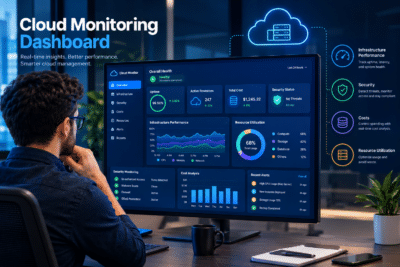
Cloud environments require ongoing monitoring, optimization, security updates, and performance management.
Ask whether the provider offers support after implementation and how they handle future changes, infrastructure optimization, application updates, and technical issues.
Why the Right Cloud Partner Matters
Cloud projects often evolve as businesses grow. An organization may initially need a simple migration but later require application modernization, automation, analytics, or more advanced infrastructure.
For this reason, businesses should look for a partner capable of supporting different stages of their technology journey. CodeCones, for example, works across software engineering, cloud, DevOps, data engineering, and AI, which can be relevant for organizations that need cloud capabilities alongside broader digital product development.
The goal is not necessarily to select the largest provider. It is to find a team that understands your requirements and can translate them into a practical, secure, and scalable technology strategy.
Conclusion
Choosing the right Cloud Engineering Services requires more than comparing prices or cloud certifications. Businesses should evaluate technical expertise, infrastructure capabilities, security practices, application development experience, automation, scalability, and long-term support.
Start by defining your objectives, assessing your existing environment, and identifying the technical capabilities you need. Then compare providers based on relevant experience and their ability to deliver a practical solution.
A well-chosen cloud engineering partner can help create an environment that is more scalable, reliable, secure, and prepared for future business growth. For organizations beginning their evaluation, comparing Cloud Engineering Solutions, infrastructure capabilities, and development expertise is a useful first step toward making an informed decision.